
Discover Email Marketing: Why It Still Works in 2026 and learn how businesses use email campaigns to boost engagement, build trust, and increase sales.
Every few years, someone predicts the end of this digital channel. The rumors are always wrong.
This method still delivers one of the highest returns on investment. For every dollar spent, businesses see an average return of around $36. This beats many newer, flashier options.
The data is clear. This strategy simply works. It connects directly with your audience.
So, the real question for 2026 isn’t if it works. The question is how to make it work smarter for your specific goals.
We are here to guide you through a practical, step-by-step framework. Let’s build a campaign that delivers real results.
Key Takeaways
- It consistently offers an unmatched return on investment, often cited as $36 for every $1 spent.
- This channel provides a direct line of communication to your subscribers’ inboxes.
- Modern tools allow for incredible personalization and automation.
- Results are highly measurable, letting you track opens, clicks, and conversions.
- It integrates seamlessly with other marketing efforts, strengthening your overall strategy.
- The foundation is built on permission and trust, making it a sustainable long-term asset.
The Unshakeable Foundation: Why Email Endures in a Digital World
Let’s look at why email, a technology from decades ago, is still powerful today. In a world of changing algorithms and platforms, email marketing stands strong. It offers a stable way to communicate directly with your audience.
Beyond the Hype: Email’s Fundamental Advantages
Email works quietly in the background, unlike social media and search engines. It delivers results based on core principles that newer channels struggle to match.
Ownership, Control, and Direct Access to Your Audience
Your email list is a business asset you own. Think of social media as renting an apartment. The landlord can change the rules or evict you anytime. But your email list is your own home, where you have the keys.
This means you have direct access to your audience, without a middleman deciding who sees your message. As one source puts it,
“Unlike social media algorithms or search engine volatility, email delivers direct access to your audience — without middlemen… It’s a channel built on permission and trust.”
When someone subscribes, they’re inviting you into their inbox. This creates a relationship foundation that paid ads can’t buy.
Unmatched ROI and Tangible, Measurable Results
For budget-conscious marketers, the numbers are compelling. Email marketing consistently delivers the highest return on investment of any digital channel. The data is clear and impressive.
“Even in 2025, global studies continued to show an average ROI of $36–$42 per dollar spent on email marketing — higher than any other digital channel.”
Every aspect of an email campaign is measurable. We can track opens, clicks, conversions, and revenue with precision. This turns marketing into a directly accountable profit driver. You know exactly what’s working and where to invest next.
The 2026 Landscape: Integration and Intelligence
Email hasn’t just survived; it has evolved. Today, it’s not a standalone tool but the intelligent core of a modern marketing strategy.
Gone are the days of email operating in a silo. In 2026, your email platform is the central nervous system. It connects seamlessly with your CRM, e-commerce store, advertising platforms, and SMS tools.
This integration creates a unified customer view. A click in an email can sync data to retarget that user with a social media ad. An abandoned cart can trigger a personalized email sequence. As noted, “Email is the anchor of the digital identity… it ties together customer journeys across devices and channels.”
This hub-and-spoke model makes your entire marketing effort smarter and more cohesive.
Personalization at Scale Powered by AI and Data
The future of email marketing is hyper-relevant. We’ve moved far beyond just inserting a first name. Today, AI-powered tools analyze vast amounts of behavioral data to predict what a subscriber wants to see next.
This means dynamic content that changes based on a user’s past purchases, browsing history, or engagement level. One source highlights this shift:
“The next generation of email marketing is about behavioral intelligence, real-time personalization, and predictive engagement.”
For instance, AI can help email marketing firms segment audiences automatically and recommend the optimal time to send each email. This level of personalization at scale boosts open rates, engagement, and conversions dramatically. It turns a broad campaign into millions of one-to-one conversations.
The result is a channel that is both timeless in its principle and cutting-edge in its execution. That’s the unshakeable foundation for success.
Step 1: Crafting Your Core Email Marketing Strategy
Let’s start building a strategic plan for your emails. A solid email marketing strategy is like a compass in a busy inbox. It helps keep your efforts focused, measurable, and effective.
As one expert notes,
“Email marketing in 2026 isn’t about frequency — it’s about relevance. Every message should feel timely, personalized, and valuable.”
Your strategy makes this relevance happen.
Define Clear Goals and Understand Your Audience
You can’t hit a target you can’t see. Knowing what you want to achieve and who you’re talking to is key to your email marketing strategy.
Setting SMART Goals for Your Email Campaigns
Vague goals like “get more sales” won’t work. We need goals that are Specific, Measurable, Achievable, Relevant, and Time-bound.
Here are examples of SMART goals for your email program:
- Specific & Measurable: Increase click-through rates for our weekly newsletter by 15% within the next quarter.
- Achievable & Relevant: Grow our lead nurturing email list by 1,000 qualified subscribers in six months through a new gated guide.
- Time-bound: Reduce cart abandonment by 20% using a three-email automated sequence by the end of Q3.
These goals give your team a clear target and a way to track progress.
Creating Detailed Buyer Personas for Targeted Messaging
Personalization starts with understanding. A buyer persona is a semi-fictional profile of your ideal customer.
To build one, gather data on:
- Demographics: Age, job title, location.
- Psychographics: Challenges, goals, values.
- Behavior: How they interact with your brand and content.
Writing an email for “Marketing Manager Mary” instead of “a subscriber” makes your messaging more relevant and engaging.

Audit and Select the Right Tools for the Job
With your goals and audience defined, you need the right technology to execute your plan. Your platform is the engine of your email marketing strategy.
Key Platform Features to Look for in 2026
Modern platforms use AI to go beyond basic blasts. Here are the non-negotiable features for 2026:
| Feature | What It Does | Why It Matters |
|---|---|---|
| AI-Driven Segmentation | Automatically groups subscribers based on behavior, preferences, and engagement. | Ensures you send the right message to the right person without manual work. |
| Predictive Send-Time Optimization | AI analyzes when each individual is most likely to open and engage. | Dramatically increases open rates by delivering emails at the perfect moment. |
| Advanced Automation Builder | Visual workflow editor for creating complex nurture sequences, welcome series, and re-engagement campaigns. | Saves time and delivers a personalized customer journey 24/7. |
| Deep Integration Capabilities | Connects seamlessly with your CRM, e-commerce platform, and analytics tools. | Creates a single customer view and triggers contextually relevant emails. |
These features turn your strategy into a dynamic, intelligent system.
Common Mistake: Overpaying for Unused Features
The biggest error is choosing a platform based on a feature checklist, not your actual needs. You might not need an enterprise-grade solution with 50 advanced modules.
Match the tool to your strategy. If your main goal is lead nurturing, focus on automation and segmentation. Start with a platform that scales with you. Paying for unused features drains your budget and complicates your workflow.
Your core email marketing strategy—your defined goals and known audience—should guide every tool and feature choice.
Step 2: Building a Quality, Permission-Based Email List
Starting a strong email marketing channel begins with a key step: creating a list of people who want to hear from you. It’s not about collecting random emails. It’s about building an audience that has given you permission to connect. A quality list boosts open rates, engagement, and sales.
Creating Irresistible Lead Magnets and Sign-Up Incentives
To get permission, offer real value first. E-books and PDFs still work. But today, people want more interactive and immediate value. Your lead magnet should solve a problem or fulfill a desire.
Beyond the E-book: Interactive Content, Tools, and Exclusive Access
Think of your lead magnet as a mini-experience. Interactive content is engaging and provides value right away. This makes subscribers feel understood from the start.
| Lead Magnet Type | Examples | Best For |
|---|---|---|
| Interactive Content | Style quizzes, marketing budget calculators, interactive product selectors, diagnostic assessments. | Audiences seeking personalized recommendations or quick answers. |
| Tool-Based Access | Free trial of a software feature, a downloadable template pack (Canva, Excel), a browser extension. | Professionals and do-it-yourself learners who value utility. |
| Exclusive Access | Private video workshop series, members-only webinar, early-bird product launch list, curated content hub. | Building a dedicated community and rewarding super-fans. |
Optimizing Sign-Up Forms and Landing Pages for Conversion
A great lead magnet won’t work if the sign-up process is hard. Your forms and pages must be clear, trustworthy, and easy to use.
- Keep it simple. Ask for only the essential information—usually just name and email address to start.
- State the value clearly. Use a strong headline that promises the benefit. “Get your free website speed audit” is better than “Subscribe to our newsletter.”
- Build trust instantly. Add a short privacy promise. “We respect your inbox. No spam, ever.”
- Design for mobile. Most sign-ups happen on phones. Ensure your form fields and buttons are easy to tap.
Growing and Segmenting Your List for Maximum Relevance
Once you have a sign-up engine, focus on smart growth and organization.
The real gains come from being smarter, not louder.
This means attracting the right people and then speaking to them in the most relevant way possible.
Effective Organic List-Building Tactics
Buying lists is a terrible idea (more on that soon). Organic email list building is the only sustainable path. Beyond your website’s main form, try these tactics:
- Add a sign-up option during the e-commerce checkout process.
- Host a webinar or live Q&A and require registration via email.
- Offer exclusive content upgrades within your best blog posts.
- Run a social media contest where entering requires an email address.
- Collaborate with complementary brands on a co-created lead magnet.
How to Segment Your Audience Based on Behavior and Data
Segmentation is the secret weapon for relevance. It means dividing your main list into smaller groups based on shared characteristics. Start segmenting from the moment someone joins.
You can segment based on:
- Sign-Up Source: Did they come from your blog, a webinar, or a specific social media ad? This tells you their initial interest.
- Lead Magnet Interest: Someone who downloaded a “Beginner’s Guide” has different needs than someone who grabbed an “Advanced Tactics” whitepaper.
- Email Engagement: Create segments for frequent openers, clickers, or those who haven’t opened an email in 90 days.
- Purchase History: For e-commerce, segment by product category, customer vs. non-customer, or average order value.
Critical Warning: The Dangers of Buying Email Lists
This cannot be stressed enough: never buy an email list. It violates the core principle of permission-based marketing and will damage your campaign’s health.
When you send emails to purchased lists, recipients don’t know you. They didn’t ask for your messages. The results are always bad:
- Sky-high spam complaint rates.
- Terribly low open and click rates.
- Severe damage to your sender reputation with email providers (like Gmail or Outlook).
- Your future emails, even to your real subscribers, may land in the spam folder.
- Potential legal issues under laws like the CAN-SPAM Act.
Building your own list is the only way. It takes more effort, but every subscriber is a genuine opportunity. Quality always, always trumps quantity in email list building.
Step 3: Designing and Automating High-Impact Email Campaigns
Email marketing shines when creative design meets smart automation. This step turns your plan into a series of connected experiences. Every pixel and automated trigger works to engage your audience.
Great email campaigns grab attention in a crowded inbox. They deliver timely, relevant messages without manual effort each time. Let’s explore how to master both the art of single emails and the science of automated sequences.
Crafting Emails That Get Opened, Read, and Clicked
Before automating, perfect the single message. An effective email combines persuasive copy, clear structure, and inclusive design. Each element, from the subject line to the footer, has a role.
Writing Subject Lines and Preheaders That Stand Out in 2026
Your subject line is your first impression. In 2026, inboxes are smarter, but human psychology remains the same. We still respond to curiosity, benefit, and urgency.
Start with clarity. Tell the reader exactly what they’ll get. Personalization tokens like a first name can help, but don’t overdo it. The preheader text is your second chance. Use it to expand on the subject or highlight a key offer.
Pro tip: Avoid spam trigger words like “free” or “guarantee” used aggressively. Test different styles: questions, how-tos, or simple statements. The goal is to earn the open, not trick someone into it.
Structuring Your Email Body for Clarity, Value, and Action
Once opened, you have seconds to communicate value. Start with a strong greeting that matches your brand voice. Immediately state the email’s purpose. Why is this message valuable to the reader right now?
Use a clear hierarchy:
- Headline: Reinforce the core promise.
- Body Copy: Keep it scannable. Short paragraphs, bullet points, and bold text guide the eye.
- Visuals: Support your message, don’t distract from it.
- Call-to-Action (CTA): One primary CTA is best. Make the button text action-oriented (“Get Your Guide,” “Finish My Order”) and visually prominent.
Every sentence should serve the goal of moving the reader toward that CTA.
Design Best Practices for Mobile, Dark Mode, and Accessibility
Design is not just about looking good. It’s about functioning flawlessly for every user. More than 70% of email opens happen on mobile. Responsive layouts, concise copy, and tappable CTAs are no longer optional—they’re essential.
Test your designs on multiple devices. Ensure buttons are large enough for a thumb to tap easily. Use a single-column layout for the best mobile experience.
Dark mode is now a standard user preference. Emails with solid white backgrounds can look glaring in a dark app. Use transparent PNGs for logos, test your color contrasts, and avoid relying solely on dark text on light backgrounds.
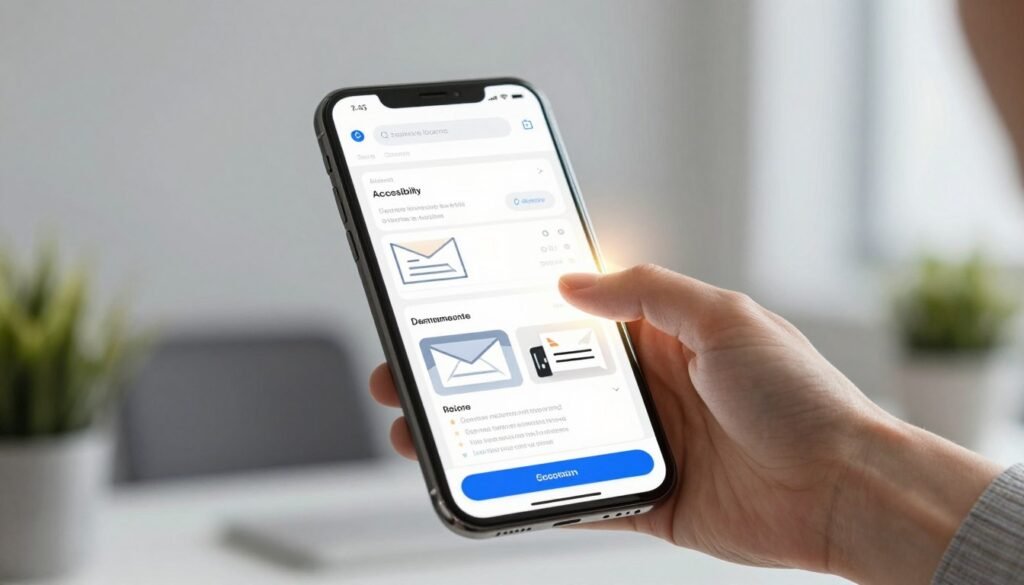
Accessibility is a must. Over 15% of users rely on features like screen readers. Designing emails with proper hierarchy, alt text, and legible contrast ensures every user can experience your message fully.
- Always add descriptive alt text to images.
- Use a font size of at least 14px for body text.
- Maintain a high contrast ratio between text and background colors.
- Use semantic HTML structure when coding emails.
Implementing Smart Marketing Automation Flows
This is where marketing automation becomes your force multiplier. Automation sends the right message to the right person at the right time, based on their actions or profile. It turns one-time subscribers into lifelong customers.
Behavior-based messages, welcome notes, onboarding, education, nurturing, check-ins, and re-engagement all tend to outperform one-off blasts because they’re tied to something real.
Think of automation as setting up a helpful conversation that runs on its own. The key is relevance and timing.
Setting Up a Welcome Series That Nurtures and Converts
A welcome series is your most important automated sequence. It sets the tone for the entire relationship. A good series does more than say “thanks for signing up.” It delivers immediate value.
A typical 3-5 email series might include:
- Instant Delivery: Send your lead magnet immediately and introduce your brand’s mission.
- Value Addition: Share a useful tip, case study, or piece of content related to their interest.
- Relationship Building: Tell your brand story or introduce your team.
- Soft Ask: Gently guide them toward their first purchase or next step with a special offer.
Space these emails out over a week or two. Measure success by open rates, click-through rates, and conversion on the final CTA.
Creating Behavioral Triggers (Abandoned Cart, Browse Abandonment)
These are hyper-relevant email campaigns triggered by specific user actions. They recover lost sales and re-engage interested visitors.
Abandoned Cart Emails: If someone adds an item to their cart but doesn’t check out, an automated series can remind them. The first email, sent within a few hours, can simply remind them. A follow-up 24 hours later might address common objections or include a limited-time discount.
Browse Abandonment Emails: If a user views a product page but doesn’t add to cart, you can trigger an email showcasing that product, along with related items or reviews. This keeps your brand top-of-mind.
The golden rule for behavioral triggers: be helpful, not creepy. Provide clear value and an easy path back to complete the action.
Common Mistake: The “Set-and-Forget” Automation Trap
The biggest error in marketing automation is assuming your flows will work perfectly forever. Customer behavior changes. Your products change. What worked last year may not work today.
You must schedule regular reviews of your automated sequences. Look at the performance metrics. Are open rates dropping? Are certain emails not getting clicks? A/B test different subject lines, CTAs, or send times within your automated flows.
Also, update your content. If your welcome series mentions a specific promotion or product, keep it current. Automation is a powerful tool, but it requires ongoing care and optimization to stay effective.
By combining well-designed emails with thoughtful automation, you create a system that works for you 24/7, building relationships and driving results.
Step 4: Testing, Analyzing, and Optimizing for Continuous Improvement
The fourth step turns your email marketing into a learning tool. We move from creating to improving. This phase makes good email campaigns even better. It also protects our sender domain’s reputation.
Key Metrics to Track and What They Really Mean
Data guides us. Open rates are just the surface. We need to look deeper into metrics that show true subscriber intent and campaign success.
Beyond Open Rates: Focusing on Engagement and Conversion Metrics
Forget about vanity metrics. The real story is in engagement and revenue. We focus on indicators that show subscribers are interacting with our content and taking desired actions.
Key performance indicators now include the Click-to-Open Rate (CTOR). This tells us what percentage of people who opened your email actually found the content compelling enough to click. A high CTOR means your message resonates powerfully.
Even more critical is Revenue per Email Sent (RPE). This cuts through the noise to show the direct monetary value of each campaign. Some marketers also use a composite Engagement Score, which weights opens, clicks, and conversions to gauge overall health.
The table below highlights the shift from outdated to modern, actionable metrics:
| Old School Metric | Modern, Actionable Metric | What It Really Tells You |
|---|---|---|
| Open Rate | Click-to-Open Rate (CTOR) | Content relevance and engagement depth after the open. |
| Click-Through Rate (CTR) | Revenue Per Email (RPE) | The direct profitability and bottom-line impact of your campaign. |
| List Growth Rate | Engagement Score / List Health Score | The overall quality and activity level of your audience segment. |
Using A/B Testing to Refine Every Element
Guessing what works is a losing strategy. A/B testing provides the answers. This means sending two variations of a single element to a small portion of your list to see which performs better.
Test more than just subject lines. Try different:
- Send times and days of the week
- Call-to-action button colors and text
- Email preview text
- Images versus no images
- Personalization levels
Advanced platforms now use AI to run continuous, multivariate tests. They learn from performance data to self-optimize future email campaigns automatically. This takes the heavy lifting out of constant manual testing.
Maintaining List Health and Sender Reputation
All our creative and analytical work depends on one thing: our emails reaching the inbox. List health and sender reputation are the guardians of our deliverability. Neglecting them can sink even the most brilliant campaign.
Regularly Cleaning Your List and Managing Unsubscribes
A clean list is a healthy list. We must regularly remove invalid email addresses and disengaged subscribers. High bounce rates and spam complaints are major red flags for internet service providers.
Make unsubscribing easy and immediate. A difficult unsubscribe process frustrates users and increases the likelihood they’ll hit the “spam” button instead. View every unsubscribe as feedback, not failure. It helps you focus on your truly engaged audience.
Use your platform’s tools to monitor bounce rates, opt-outs, and identify inactive segments. Pruning these contacts improves your metrics and protects your reputation.
Best Practices for Inbox Placement and Avoiding Spam Filters
Following a few technical and content guidelines keeps you out of the spam folder.
First, implement email authentication protocols. These are non-negotiable:
- SPF (Sender Policy Framework): Verifies you are allowed to send from your domain.
- DKIM (DomainKeys Identified Mail): Adds a digital signature to prove your email wasn’t forged.
- DMARC (Domain-based Message Authentication): Tells receiving servers what to do if SPF or DKIM checks fail.
Second, encourage consistent engagement. Send regularly so subscribers remember you. Segment your list to send highly relevant content. Irrelevant emails lead to disengagement, which hurts your sender score.
Finally, watch your language. Avoid spam-trigger words like “free,” “guarantee,” and “act now” in your subject lines. Use a natural, friendly tone. Always include a clear physical mailing address in your footer, as required by law.
By combining smart analysis with diligent list hygiene, we ensure our email campaigns not only perform well today but continue to reach inboxes for years to come.
Conclusion
Email is not just alive — it’s thriving. For businesses focused on growth, it remains the heartbeat of digital communication. As we move into 2026, the smartest marketers won’t ask if email still works. They’ll ask how to make it work smarter.
We have a strong foundation. We have direct access to our audience, a channel with proven high ROI, and tools that make email an intelligent hub. The steps we’ve outlined—building a solid strategy, growing a quality list, designing automated campaigns, and constantly optimizing—are your blueprint.
Success in email marketing now belongs to those who blend creativity with data-driven precision. It belongs to marketers who focus on delivering genuine value in every single interaction. Your audience’s inbox is a place of trust.
We encourage you to apply these steps with confidence. Start with one goal, one segment, or one automated workflow. Measure your results and learn. The path forward is clear. In 2026 and beyond, effective email marketing is about working smarter, not just harder.
FAQ
Is email marketing still effective in 2026?
FAQ
Is email marketing still effective in 2026?
Yes, email marketing is still very effective. It has a high average ROI of around for every
FAQ
Is email marketing still effective in 2026?
Yes, email marketing is still very effective. It has a high average ROI of around $36 for every $1 spent. This is much better than many social media and paid ads.
It has evolved into a smart way to communicate with people. This makes it even more useful in 2026.
How does email marketing ROI compare to social media?
Email marketing’s ROI is usually much higher. Social media is good for getting your brand noticed, but you don’t really own that space. With email, you have a direct line to people who want to hear from you.
This makes email a more reliable and cost-effective way to get results.
What role does AI play in modern email marketing?
AI is key to making email marketing super personal. It goes beyond just using someone’s name. AI tailors content and recommendations based on what someone does and has done.
This makes emails feel like they’re talking directly to you. It greatly improves how well your emails do.
How do I start building an email marketing strategy?
Start by setting clear goals for what you want to achieve. Then, create detailed profiles of who you’re talking to. Finally, pick an email service provider that can help you achieve your goals.
Choose someone like HubSpot or Klaviyo that uses AI and has good integrations.
What are some good lead magnet ideas for building an email list today?
Think beyond just e-books. Create interactive, valuable things like quizzes or videos. The goal is to give something useful right away.
This makes people happy to give you their email address.
Why is segmenting my email list so important?
Segmentation makes your emails more relevant. This leads to better engagement. By dividing your list, you can send messages that really speak to people.
This means new subscribers get a special welcome, and people interested in shoes see different content than those who like jackets. It’s all about being targeted.
Is it ever okay to buy an email list?
No, it’s never okay. Buying a list can hurt your reputation and strategy. Emails from bought lists often get marked as spam.
This leads to low engagement and can even get you in trouble with the law. Always get emails the right way.
What makes a great email subject line in 2026?
A great subject line is clear, short, and interesting. Use personal touches and ask questions. Always test different subject lines to see what works best.
Why is mobile-first design non-negotiable for email campaigns?
Most emails are opened on phones. A design that works on phones is essential. This means easy-to-read content and big buttons.
Don’t forget to test how your email looks in dark mode. If it’s hard to read on a phone, you’re missing out on a lot of engagement.
What are some essential marketing automation flows to set up?
Start with a welcome series and a cart abandonment sequence. The welcome series introduces new subscribers and sets the tone. The cart abandonment sequence reminds people about what they left behind.
Other important flows include follow-ups after a purchase, reminders for people who browsed but didn’t buy, and campaigns to bring back inactive subscribers.
Beyond open rate, what email marketing metrics should I track?
While open rate is important, deeper metrics tell a fuller story. Look at Click-to-Open Rate (CTOR) and conversion rates like Revenue Per Email (RPE). These show how well your emails are really doing.
Focus on metrics that show how your emails are helping your business, not just how many people open them.
How often should I clean my email list, and why?
Clean your list at least every three months. Removing bad addresses and inactive subscribers keeps your reputation strong. ISPs watch how well your emails do.
High bounce rates and low opens can send your emails to spam. Keeping your list clean helps you reach people who actually want to hear from you.
spent. This is much better than many social media and paid ads.
It has evolved into a smart way to communicate with people. This makes it even more useful in 2026.
How does email marketing ROI compare to social media?
Email marketing’s ROI is usually much higher. Social media is good for getting your brand noticed, but you don’t really own that space. With email, you have a direct line to people who want to hear from you.
This makes email a more reliable and cost-effective way to get results.
What role does AI play in modern email marketing?
AI is key to making email marketing super personal. It goes beyond just using someone’s name. AI tailors content and recommendations based on what someone does and has done.
This makes emails feel like they’re talking directly to you. It greatly improves how well your emails do.
How do I start building an email marketing strategy?
Start by setting clear goals for what you want to achieve. Then, create detailed profiles of who you’re talking to. Finally, pick an email service provider that can help you achieve your goals.
Choose someone like HubSpot or Klaviyo that uses AI and has good integrations.
What are some good lead magnet ideas for building an email list today?
Think beyond just e-books. Create interactive, valuable things like quizzes or videos. The goal is to give something useful right away.
This makes people happy to give you their email address.
Why is segmenting my email list so important?
Segmentation makes your emails more relevant. This leads to better engagement. By dividing your list, you can send messages that really speak to people.
This means new subscribers get a special welcome, and people interested in shoes see different content than those who like jackets. It’s all about being targeted.
Is it ever okay to buy an email list?
No, it’s never okay. Buying a list can hurt your reputation and strategy. Emails from bought lists often get marked as spam.
This leads to low engagement and can even get you in trouble with the law. Always get emails the right way.
What makes a great email subject line in 2026?
A great subject line is clear, short, and interesting. Use personal touches and ask questions. Always test different subject lines to see what works best.
Why is mobile-first design non-negotiable for email campaigns?
Most emails are opened on phones. A design that works on phones is essential. This means easy-to-read content and big buttons.
Don’t forget to test how your email looks in dark mode. If it’s hard to read on a phone, you’re missing out on a lot of engagement.
What are some essential marketing automation flows to set up?
Start with a welcome series and a cart abandonment sequence. The welcome series introduces new subscribers and sets the tone. The cart abandonment sequence reminds people about what they left behind.
Other important flows include follow-ups after a purchase, reminders for people who browsed but didn’t buy, and campaigns to bring back inactive subscribers.
Beyond open rate, what email marketing metrics should I track?
While open rate is important, deeper metrics tell a fuller story. Look at Click-to-Open Rate (CTOR) and conversion rates like Revenue Per Email (RPE). These show how well your emails are really doing.
Focus on metrics that show how your emails are helping your business, not just how many people open them.
How often should I clean my email list, and why?
Clean your list at least every three months. Removing bad addresses and inactive subscribers keeps your reputation strong. ISPs watch how well your emails do.
High bounce rates and low opens can send your emails to spam. Keeping your list clean helps you reach people who actually want to hear from you.