

Learn How to Create AI Explainer Videos That Boost Conversions and discover powerful AI tools to create engaging videos that turn viewers into customers.
👉 Click here to discover the AI video tool
Welcome! We’re diving into the exciting world of artificial intelligence animated content. This guide shows how to use this tech to make short, engaging videos. These videos don’t just get watched—they actually work.
These videos are super effective. Studies show they keep viewers hooked for about 70% of the time. The best length is between 60 and 90 seconds.
Think of them as your dynamic elevator pitch. They sell an idea by showing its key strengths and benefits. Plus, modern AI tools can turn simple text into professional videos in minutes.
Forget the old days of expensive studios and long editing times. Today, making great marketing assets is easy, fast, and effective. It helps increase conversions for things like sign-ups, training, or product demos. Let’s discover how to make content your audience loves and acts on.
Key Takeaways
- AI-powered explainer videos are short, compelling pieces that act as a dynamic elevator pitch for your idea.
- They excel at holding viewer attention, with audiences typically watching about 70% of the total length.
- The most effective duration for these videos is between 60 and 90 seconds.
- Modern artificial intelligence tools can transform a simple text prompt into a professional video in just minutes.
- This method makes high-quality video production accessible and fast, eliminating the need for expensive studios.
- These videos are designed to boost key conversions, like website sign-ups, training completions, and product demos.
The Unbeatable Power of AI Explainer Videos for Conversions
Forget the old days of complex video shoots and editing marathons. AI explainer videos are here to change your game. They mix the power of visual stories with AI’s scalability. This combo informs and guides viewers to make a choice.
This power shines in two key areas. First, the short-form explainer format’s effectiveness. Second, AI’s role in making top-quality video production accessible to all.
Why Short-Form Explainer Videos Drive Decisions
Our brains love quick, visual info. In fact, visuals are processed 600 times faster than text. A short, focused video hits this sweet spot.
Studies show that videos between 60 and 90 seconds keep viewers hooked at about 70%. This brief time is perfect to present a problem, your solution, and its value. You can do this without losing your audience.
This leads to a clear call to action. It’s no surprise that 68% of marketers say video gives them the best ROI. A good explainer cuts through the clutter. It answers questions before they’re asked and builds trust quickly, making decisions feel natural.
How AI Makes Professional Video Production Accessible
Before, professional video was expensive and time-consuming. AI has changed this. Now, anyone can make high-quality content from a simple script.
This shift is key to modern ai video marketing strategies. AI platforms do the hard work. They offer a range of AI presenters and avatars. You can even add interactive questions to engage viewers.
AI tools also provide valuable data on viewer engagement. This lets you see what works and make videos faster. You can test different approaches and keep your branding consistent. What was once a big project is now easy and repeatable.
The mix of short-form video’s persuasive power and AI’s accessibility is unbeatable. It lets teams make targeted videos for various audiences and languages without breaking the bank. This is the real game-changer for your business.
👉 Click here to discover the AI video tool
Pre-Production: Laying Your Conversion-Focused Foundation
Think of pre-production as the blueprint for your video’s success—it’s where you define the destination and map the route before you start building. This planning phase is the most critical factor in determining whether your video merely gets views or actually drives the actions you want. Let’s walk through the three foundational steps that set the stage for a high-converting AI explainer video.
Step 1: Pinpoint Your Single Conversion Goal
Every second of your video must serve a purpose. Start by asking one simple question: “What is the one thing I want the viewer to do after watching?” A single, crystal-clear goal keeps your message focused and powerful.
Vague goals like “increase brand awareness” won’t cut it. You need a specific, measurable action. This clarity guides every subsequent decision, from your script’s tone to your final call-to-action. Defining this goal upfront is your first and most important strategic move.
| Goal Type | Example Action | Video Focus |
|---|---|---|
| Lead Generation | Sign up for a free trial or download an ebook. | Highlighting a key problem and offering a valuable solution. |
| Direct Sale | Purchase a software subscription. | Demonstrating features as tangible benefits that solve pain points. |
| Traffic Driver | Click to read a blog post or visit a pricing page. | Creating curiosity and offering a clear next step for more information. |
Step 2: Know Your Audience Inside and Out
You can’t persuade someone you don’t understand. Before writing a single word, get into your ideal viewer’s headspace. What keeps them up at night? What words do they use to describe their challenges?
Create a simple audience persona. Note their job role, common frustrations, and what they hope to achieve. This insight allows you to speak directly to their experience, making your message resonate on a personal level. Your video should feel like it was made just for them.
Step 3: Write a Script That Sells
This is where your plan comes to life. A great script is concise, benefit-driven, and structured for maximum impact. One of the most powerful ai video scripting tips is to hook your viewer within the first 3-5 seconds. You must immediately connect with their pain point or curiosity.
Focus on what the viewer gains, not just on what your product does. A feature is a fact; a benefit is the positive change in their life. Keep sentences short and the energy high to maintain engagement from start to finish.
👉 Click here to discover the AI video tool
Using the Problem-Agitate-Solution (PAS) Formula
This classic copywriting framework is perfect for explainer videos. It creates a compelling narrative arc that naturally leads to your offer.
- Problem: Clearly state the viewer’s specific challenge. “Are you wasting hours on manual data entry?”
- Agitate: Gently amplify the frustration or cost of that problem. “Those lost hours mean missed deadlines, errors, and less time for strategic work.”
- Solution: Introduce your product or service as the direct answer. “What if you could automate that process with one click?”
“Imagine finishing your weekly reports in minutes, not hours—with perfect accuracy every time.”
Mastering this structure is a core part of effective ai video scripting tips, as it gives AI tools a clear, persuasive narrative to visualize.
Crafting a Clear and Compelling Call-to-Action
Your CTA is the bridge between watching and acting. It must be unmistakable and feel like the natural next step. Avoid weak phrases like “learn more.” Instead, use action-oriented language that aligns with your single conversion goal.
Place your CTA verbally at the end of the script and reinforce it visually on screen. For example, “Start your free trial today at [YourWebsite.com]” or “Click the link below to download our checklist.” A strong CTA turns viewer interest into measurable results, which is the ultimate goal of all your ai video scripting tips.
With a solid goal, a deep understanding of your audience, and a script built on the PAS framework, you’ve built an unshakable foundation. Now you’re ready to bring it to life with AI.
Choosing the Right AI Video Creation Tool
Your pre-production plan is like a blueprint. Now, you need the right builder, an AI video creation tool that fits your goals, skills, and budget. The tool you choose affects your workflow speed, video quality, and conversion results. Let’s make the options clear so you can pick technology that supports you.
Key Features to Compare: Avatars, Voices, and Templates
Not all AI video platforms are the same. To find the best one, focus on three main things: avatars, voices, and templates.
AI Avatars: These are your on-screen presenters. Look for a variety in appearance, ethnicity, and profession to match your brand. Advanced platforms offer realistic avatars with smooth lip-sync and gestures. Some even let you create a custom AI avatar of a real person.
AI Voices: The voiceover is crucial for engagement. The best tools have a wide range of voices in many languages. You should be able to control tone, pitch, and speed. Natural-sounding, emotionally expressive voices are essential for professional explainer videos.
Templates and Customization: Starting with a professional template saves time. But, make sure the platform lets you change colors, fonts, and graphics to match your brand. Flexibility is key.
For teams seeking maximum automation, “Agency-in-a-Box” platforms exist. These tools can automatically generate scripts and storyboards from a document or blog post, streamlining the entire process from idea to first draft.
Top Platform Overview: Synthesia, Pictory, and InVideo AI
Here’s a quick look at leading platforms, each with a unique strength:
- Synthesia: A leader in AI avatar technology, ideal for enterprise and compliance-heavy training. It boasts a huge library of diverse, realistic avatars and strong security features.
- Pictory: Excels at repurposing. Feed it a long blog post, script, or webinar, and it intelligently creates a short, engaging summary video. Perfect for content marketers.
- InVideo AI: Known for speed and a massive stock library. It’s fantastic for creating social media clips, ads, and quick-turnaround videos with rich media elements.
Other notable tools include Colossyan, which focuses on interactive training videos, and platforms like Leadde that automate the initial creative workflow.
| Platform | Best For | Key Strength | Consideration |
|---|---|---|---|
| Synthesia | Corporate training, global explainers | High-quality, diverse AI avatars & strict compliance | Higher price point; less focus on stock media |
| Pictory | Content repurposing, blog-to-video | AI that condenses long content visually | Avatar options are more limited than specialists |
| InVideo AI | Quick social videos, marketing ads | Speed, huge stock library, intuitive editor | Avatars may be less realistic than top-tier options |
| Colossyan | Interactive learning modules | Features like quizzes within videos | Niche focus on the training market |
Matching the Tool to Your Budget and Skill Level
The last step is matching the tool with your real-world constraints. Ask yourself these questions:
- Budget: Most platforms use a monthly subscription model. Many offer limited free plans for testing. Pro plans unlock more minutes, features, and export quality. Enterprise plans add collaboration and security.
- Skill Level: Are you a solo creator needing simplicity, or a pro team requiring advanced controls? Some tools are designed for drag-and-drop ease, while others offer deep customization for experts.
- Project Scale: Are you making a one-off video or planning a monthly series? Your volume needs will dictate the value of a subscription.
Following these best practices for AI explainer video tool selection ensures your investment pays off. The right platform removes technical barriers and lets you focus on what matters: crafting a message that converts.
How to create AI explainer video: The Production Process
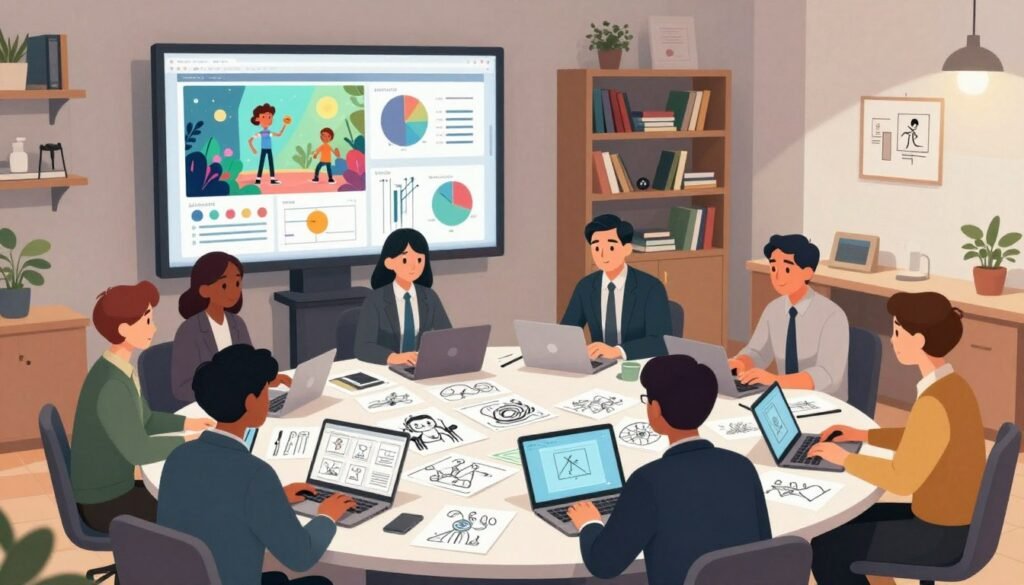
Let’s dive into the step-by-step AI video creation process. This is where your script and planning come to life as a dynamic visual story.
Step 4: Assembling Your Assets in the AI Platform
First, gather your core elements: script, voice, and on-screen presenter. This is the base of your video.
Inputting Your Script and Selecting an AI Voice
Paste your script into the platform’s text editor. Some tools, like Leadde, suggest a storyboard automatically. Then, pick an AI voice from the library.
You’ll find many voices to choose from. Pick one that fits your brand’s personality. Make sure the pacing is right to deliver your message clearly.
Choosing or Creating a Suitable AI Avatar
Next, choose your video’s presenter. Most platforms have a library of diverse AI avatars. Find one that fits your audience and brand.
For a custom look, some tools let you create a digital clone or adjust an avatar’s appearance. Your goal is to have a trustworthy spokesperson.
Step 5: Building Your Visual Storyboard
With your audio ready, start building the visual story. This is the core of your ai animation guide, turning words into engaging scenes.
Selecting Scenes, Icons, and Backgrounds
AI platforms have vast media libraries. You can pick from template scenes or upload your own. Choose backgrounds and visuals that match your script.
AI is great here. It suggests icons and scenes based on your script’s keywords. This saves time and keeps your story consistent.
Using Text Animations to Highlight Key Points
Use animated text overlays to highlight important points. Tools like Colossyan sync these text pops with the AI voiceover.
Keep animations simple and focused. A fade-in for a benefit or a bold highlight on pricing can improve viewer understanding.
Step 6: Generating and Reviewing Your First Draft
It’s time to see your video come to life. Hit “Generate” or “Render.” The AI will create a complete video draft in minutes.
Review your draft carefully. Check for audio-visual sync, pacing, clarity, and brand alignment. Take notes on any areas for improvement.
Most platforms, like Leadde, offer “Layered Editing” for fine-tuning. Your first draft is ready for polishing in the next stage.
Post-Production: Polishing Your Video to Perfection
Post-production is where your AI explainer video shines. It goes from good to great, ready to engage and convert. This phase focuses on making it perfect and impactful.
We add the finishing touches that make it professional and engaging. It’s like turning a rough diamond into a sparkling gem. Let’s explore the key ai video editing techniques to enhance your project.
Step 7: Fine-Tuning the Pace and Sync
Timing is key to keep viewers interested. A slow video loses them, while a fast one confuses.
Start by reviewing your draft carefully. Look at the scene rhythm and how the AI voiceover matches the visuals. Most AI tools let you adjust timing for better flow.
Adjust pauses for emphasis and give complex ideas enough screen time. Perfect sync makes your message cohesive and professional.
Step 8: Adding Branding, Music, and Final CTAs
Now, we add elements that show quality and guide viewers. Consistent branding builds trust and recognition.
Add your logo at the start and end. Use your brand’s colors in text overlays. A fitting background music sets the mood and fills silences.
Most importantly, finalize your call-to-action (CTA). This is your chance to convert. Make it clear, compelling, and easy to follow.
- Visual CTA: Use an annotation or text box with your desired action (e.g., “Sign Up Free”).
- Verbal CTA: Ensure the AI voice delivers the CTA with conviction.
- Link: If publishing on a platform that supports it, add a clickable link in the video description or as an end screen.
These ai video editing techniques turn a generic video into a branded asset designed for results.
Step 9: Creating a Thumbnail That Gets Clicks
The thumbnail is your first chance to grab attention. A compelling thumbnail can greatly increase clicks.
Avoid auto-generated thumbnails. Create a custom one that teases the value or sparks curiosity.
Best practices for a high-converting thumbnail:
- Use High-Contrast Colors: Make it stand out in a crowded feed.
- Include a Clear, Legible Text Hook: A few words like “How to…” or “Save Time” work well.
- Show a Friendly Face or Relevant Symbol: Human elements or recognizable icons attract attention.
- Keep it Simple: Don’t clutter the image. One focal point is enough.
Design this thumbnail in your AI tool or a simple graphic editor like Canva. It’s the final, critical piece of your post-production puzzle.
By mastering these steps, you transform your video into a powerful conversion tool. The polish you apply here makes all the difference.
Publishing for Maximum Conversion Impact
The final step in your video journey is to share it where your audience will likely take action. A great video that sits on your computer does nothing. We need to move from making it to sharing it wisely. This stage is about putting your video in front of people who are ready to watch and act.
Think of publishing as setting the stage for your star performer. Every choice, from the platform to the supporting text, affects the outcome. Let’s plan to make sure your video is seen, engages viewers, and gets them to act.
Strategic Placement: Landing Pages, Email Sequences, and Ads
Your video’s location is its first and most important marketing decision. We want to embed it in high-intent environments where visitors are already ready to learn or buy.
Landing pages are the top choice for conversion. Putting your AI explainer video on a dedicated page can boost understanding and trust. It answers questions visually, making the decision easier.
Email sequences offer a direct, personalized way to share your video. Adding it to a nurture campaign or welcome series can increase engagement. A video in an email can turn a cold lead into a warm prospect by delivering value before they click.
Paid advertising campaigns, especially on social media, allow for targeted exposure. Using your video as the creative in a lead generation or retargeting ad grabs attention faster than text or images. It’s great for awareness and consideration.
To help you decide, here’s a quick comparison of core publishing channels:
| Channel | Best Use Case | Key Metric | Pro Tip |
|---|---|---|---|
| Landing Page | Final conversion (sales, sign-ups) | Conversion Rate | Place video near the primary call-to-action button. |
| Email Campaign | Nurturing leads & driving clicks | Click-Through Rate | Use a compelling thumbnail with a play button icon. |
| Paid Social Ad | Brand awareness & lead generation | Cost Per Lead | Use the first 3 seconds to hook viewers instantly. |
| YouTube Hosting | Organic search & education | Watch Time | Enable cards to link to your website or landing page. |
Optimizing Video SEO with Titles, Descriptions, and Tags
If you host your video on a platform like YouTube or Vimeo, you’re entering a search ecosystem. Video SEO makes your content discoverable to people actively looking for solutions.
Craft a keyword-rich title. Your title should include your primary keyword and a compelling benefit. Keep it under 60 characters to ensure it displays fully in search results. For example, “How AI Explainer Videos Boost Software Conversions – A 2-Minute Guide”.
Write a detailed description. This is your chance to tell search engines and viewers what the video is about. Use your main keyword naturally in the first sentence. Include links to your website, product page, or other relevant resources. A good description is a mini-blog post.
Utilize tags strategically. Tags help platforms understand your content’s context. Use a mix of broad and specific tags. Include your brand name, product name, and related topic clusters.
Video is no longer an optional extra; it’s a fundamental component of a modern search and social strategy. Optimizing it is just as critical as optimizing a webpage.
Here’s a quick checklist for Video SEO:
- Include target keyword in filename before upload.
- Create custom thumbnails that are clear and clickable.
- Add subtitles or closed captions for accessibility and SEO.
- Choose a relevant category for your video on the hosting platform.
Promoting Your Video Across Social Channels
Don’t just publish and hope. Actively promote your AI explainer video to extend its reach. Each social channel has its own culture and best practices.
LinkedIn is ideal for B2B topics. Share your video in a post with key insights written out. Mention how it solves a common industry problem. Post in relevant professional groups to spark discussion.
Facebook and Instagram are great for visual storytelling. Use Instagram Reels or Facebook Stories to share short, engaging clips from your video. Direct viewers to the full video in your bio or via a link sticker.
Twitter (X) is perfect for quick tips. Share a standout graphic or a short video snippet as a GIF. Use relevant hashtags to join larger conversations about AI, marketing, or your niche.
Remember, promotion is not a one-time event. Share your video multiple times, using different angles and messaging. Pin it to the top of your profile. Include it in your newsletter. The goal is to maximize the return on your creative investment.
By combining strategic placement, technical optimization, and active promotion, you transform your video from a simple asset into a powerful, conversion-driving engine.
Measuring, Testing, and Scaling Your Success
Your video’s journey doesn’t end at launch. It enters a critical phase of analysis and improvement. Creating a great AI explainer video is only half the battle. The other half is learning from its performance so we can make the next one even better. This process turns a single video into a powerful, scalable conversion tool.
The Essential Metrics: View-Through and Conversion Rates
To understand if your video is working, we need to look at the right numbers. Two metrics are absolutely crucial for conversion-focused videos.
The view-through rate (VTR) tells us what percentage of viewers watched your video all the way to the end. A low VTR often means the opening hook isn’t strong or the middle section drags.
The conversion rate is the ultimate goal. This is the percentage of viewers who took your desired action after watching. Did they sign up, buy, or download? This number directly links your video to business results.
Modern video analytics go much deeper. Platforms can track plays, average watch time, and specific drop-off points. They show us the exact moment viewers lose interest.
Interactive features, like a “Chat with Video” function, provide rich engagement data. They show what questions viewers have and which parts they re-watch. This data is gold for improving content retention.
Here’s a quick guide to the metrics that matter most:
| Metric | What It Measures | Why It’s Important |
|---|---|---|
| View-Through Rate (VTR) | The percentage of viewers who watch the entire video. | Indicates overall engagement and content hold. |
| Conversion Rate | The percentage of viewers who complete your goal (e.g., purchase, sign-up). | Directly ties video performance to business outcomes. |
| Average Watch Time | How long, on average, viewers stay engaged. | Highlights if your video length matches audience patience. |
| Interaction Rate | Clicks on embedded links, quizzes, or chat features. | Shows active engagement and interest level. |
| Drop-off Points | The specific timestamps where viewers commonly leave. | Pinpoints weak spots in your script or visuals that need fixing. |
Running A/B Tests on CTAs, Length, and Thumbnails
Data tells us what’s happening. A/B tests tell us why and what to change. Testing different versions of your video elements is the fastest way to boost performance.
You don’t need to test everything at once. Start with one variable per test for clear results.
- CTA Wording: Test a direct “Buy Now” against a softer “Learn More.” Small changes in language can have a huge impact on conversion rates.
- Video Length: Try a 60-second summary against a 90-second detailed version. See which one keeps viewers engaged longer and drives more action.
- Thumbnails: This is your video’s first impression. Test an image of a person’s face against a graphic with bold text. Different thumbnails attract different clicks.
Run your test by showing version ‘A’ to half your audience and version ‘B’ to the other half. Use your platform’s analytics to see which version achieves a higher view-through or conversion rate. Let the data, not guesses, guide your decisions.
Using Insights to Improve Future Videos
The goal is to build a feedback loop. Insights from one video should directly inform the creation of the next.
If analytics show a major drop-off point at the 45-second mark, investigate. Was the explanation too complex? Did the visual become boring? Use that insight to simplify the script or add more dynamic visuals in your next project.
If an A/B test reveals that a question-based CTA (“Ready to get started?”) outperforms a command (“Sign up now”), apply that learning to all your future video scripts. This is how we scale success.
Every piece of engagement data is a clue about our audience’s preferences. High interaction with a quiz feature might mean they enjoy interactive learning. We can then add more interactive elements to boost retention.
This cycle of create, measure, test, and refine turns video production from a one-off task into a consistent growth engine. Each video becomes smarter and more effective than the last.
Conclusion
We’ve explored how to make AI explainer videos that increase sales. This includes planning, picking the right tools, making the video, and improving it based on data.
Creating AI explainer videos is about combining smart planning with automated tools. These videos help you work fast and still keep quality high. This leads to real engagement. The future of video is all about making it yourself, using automated tools, and growing it endlessly.
This guide helps you make professional videos quickly. You’re now ready to handle everything from writing the script to publishing. This will help your business see real results.
Now, you have the power to make engaging video content. Start your next AI explainer video project. Lead the way in today’s marketing world.
👉 Click here to discover the AI video tool