

Ever dreamed of running your own online store but worried about inventory costs and storage? You’re not alone. The ecommerce world is booming, and a special model is making it easier than ever.
This model is set to become a multi-trillion dollar market. It lets you sell products without touching them. A supplier keeps the stock and ships orders straight to your customers.
Starting a profitable business needs a solid plan. That’s what we’re here for. We’ll guide you through every key step, from finding great products to launching and growing your store.
This guide is your complete roadmap. We’ll make the process clear with practical steps and insights from the latest trends. Let’s start this exciting journey and see how you can build a lasting online business from scratch.
Key Takeaways
- The dropshipping model eliminates the need for you to manage inventory or handle shipping logistics.
- This ecommerce approach has a very low barrier to entry, making it accessible for new entrepreneurs.
- The global market for this business method is significant and shows strong projected growth.
- Success requires a detailed, step-by-step plan covering product selection, store setup, and marketing.
- Our guide will provide actionable advice to help you launch and scale a profitable online store.
- Focus on building a sustainable operation rather than looking for a quick, easy win.
Understanding the Dropshipping Business Model
Before we start building your online store, we need to understand how dropshipping works. It’s a special way of ecommerce dropshipping that makes it easy for new sellers to get started.
You act as the middleman in a three-party deal. Your job is to market and make customers happy. The supplier takes care of the stock and shipping. Here’s how it usually goes:
- A customer buys something from your store and pays you the price you set.
- You send the order and payment to your supplier.
- You pay the supplier the wholesale cost of the item.
- The supplier ships the product directly to the customer, making it look like it came from your store.
- You keep the difference between what you charged and what you paid the supplier as your profit.
Your role is crucial. You decide the prices, handle customer service, and deal with returns. The supplier stays hidden from your customers, working behind the scenes for you.
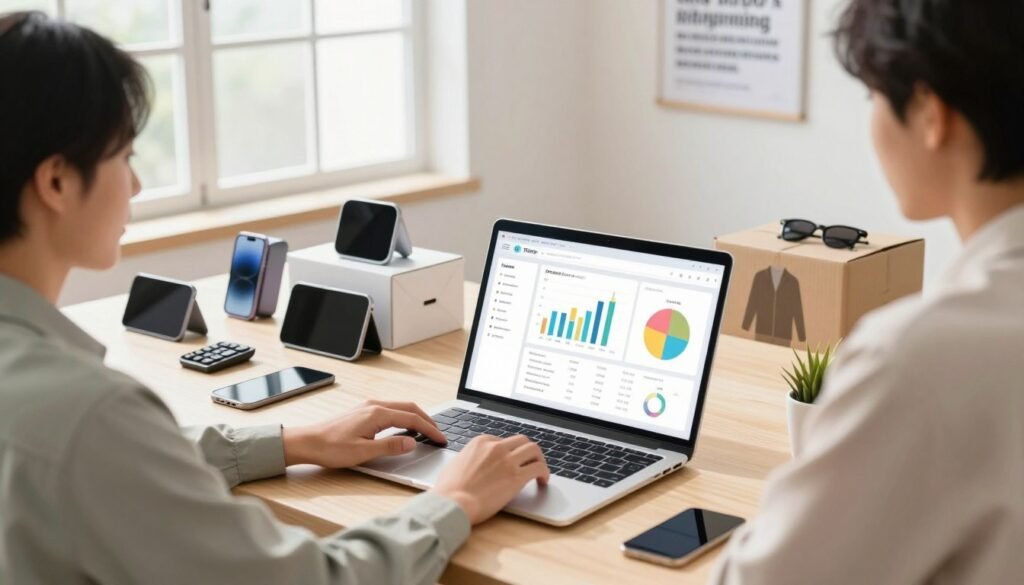
This setup has its pros and cons. It offers freedom and low startup costs, but it also brings unique challenges. Let’s look at them closely.
| Key Advantages | Potential Challenges |
|---|---|
| Very Low Startup Costs: You don’t need to buy inventory first. Your main costs are your store platform, apps, and marketing. | Less Control Over Shipping: You depend on your supplier’s speed and reliability. Slow shipping can hurt your reviews. |
| No Inventory Management: You don’t have to worry about warehousing, packing, or tracking stock. This saves a lot of time. | Product Quality Checks are Harder: You can’t check items before they ship to customers. |
| Operational Flexibility: You can run your business from anywhere with an internet connection. You can test new products with little risk. | Lower Profit Margins: With low barriers to entry, competition can be fierce, leading to price wars. |
| Wide Product Selection: You can offer many items from different suppliers without a big investment. | Supplier Dependency: Your reputation depends on your supplier’s performance. If they run out of stock, so do you. |
Understanding this balance is key to success. The low overhead is fantastic, but relying on suppliers can be tricky. A successful store owner focuses more on marketing and building relationships than on managing a warehouse.
With a clear understanding of the game, you can start your ecommerce dropshipping journey. You know the rules. Now, let’s build a solid foundation for your business.
Step 1: Laying the Foundation for Your Business
Building a strong foundation is key for any new online selling business. It’s like building a house. A weak base can cause problems later. We aim for a solid start for your business.
This step involves making smart choices before you start. It’s about setting up your business for success.

1. Niche Selection and Product Research
Your niche is your specialty. It’s the area of the market you’ll focus on. A good niche should match your interests and offer profit potential.
For example, if you love sustainable living or fitness tech, that’s a great niche. Your passion will help with marketing.
Use tools like Google Trends to see what’s popular. Amazon Best Sellers shows what’s selling now. Look for products with steady demand.
Avoid broad or competitive markets. “Fashion” is tough. “Eco-friendly yoga wear for men” is a better target. Here are some niche ideas:
- Smart home gadgets for apartment dwellers
- Subscription boxes for specialty coffee lovers
- Ergonomic accessories for remote workers
- Eco-friendly baby products
2. Conducting Market and Competitor Analysis
Once you pick a niche, understand the market. Who else sells similar products? What do they do well? Where do they fall short? This helps you find your edge.
Identify 5-10 competitors. Check their stores, sign up for emails, and follow them on social media. Note their pricing, product descriptions, and reviews. Look for complaints to improve.
The goal is to learn and improve, not to copy. Your unique angle could be better service, more content, or a better product selection.
Follow these steps for a simple analysis:
- Find top competitors online and on social media.
- Analyze their products, pricing, and shipping.
- Read reviews to find unmet needs or pain points.
- Determine how you can offer more value.
3. Legal Setup and Business Finances
This part isn’t glamorous but it’s crucial. It protects you. Start with a business structure. This choice affects your liability and taxes.
| Business Structure | Key Feature | Personal Liability | Best For |
|---|---|---|---|
| Sole Proprietorship | Simplest to set up | Unlimited (You are personally responsible) | Testing a business idea with minimal risk |
| LLC (Limited Liability Company) | Flexible & popular for ecommerce | Limited (Protects personal assets) | Most new online store owners |
| Corporation (S-Corp/C-Corp) | Complex structure | Limited | Businesses planning to seek major investment |
For most, an LLC is a good choice. It offers protection and simplicity. Next, open a business bank account. Never mix personal and business finances. It makes accounting hard.
Let’s talk about initial costs. Your startup investment is low:
- Website Domain: $5 – $25 per year
- Ecommerce Hosting/Platform: $5 – $80+ per month
- Sample Orders: $50 – $200 (to test product quality)
- Business Registration: $50 – $500 (varies by state for LLC)
Track every dollar from day one. Use a spreadsheet or software like QuickBooks. This helps with taxes and understanding profit margins.
With a solid niche, market understanding, and legal protection, you’re ready to grow. Now, find the products and suppliers for your store.
Step 2: Sourcing Products and Suppliers
Your dropshipping business’s success depends on your suppliers. They handle everything from inventory to shipping. A good supplier makes you look great. A bad one can ruin your business.
Finding reliable suppliers is key. We’ll show you where to look and what to check.
1. Top Platforms to Find Dropshipping Suppliers
Looking for suppliers doesn’t have to be hard. Special platforms connect you with trusted suppliers. Choose based on your niche and target market.
Here’s a breakdown of the leading options:
| Platform | Best For | Key Feature | Primary Market |
|---|---|---|---|
| Spocket | Fast shipping & premium products | US & EU suppliers with 2-5 day delivery | North America, Europe |
| CJdropshipping | Huge product variety & customization | Extensive catalog with sourcing services | China (with worldwide shipping) |
| Zendrop | Branding & subscription boxes | Branded invoicing and packaging options | Global |
| Printful | Print-on-demand products | High-quality printing on apparel & home goods | US, Europe |
| DSers | AliExpress integration & automation | Bulk order processing and price monitoring | China (via AliExpress) |
Spocket is great for US or European customers. Their suppliers ship fast, which customers love.
CJdropshipping offers a huge selection and can help with product ideas. They have a lot of unique items.
Zendrop is for those who want to build a brand. They help you present a unified brand image.
Printful is perfect for custom designs. Upload your design, and they handle the rest.
DSers is great for managing AliExpress orders. It makes the process easier.
2. Vetting Suppliers and Placing Sample Orders
Finding a supplier is just the start. You must vet them carefully. Never skip this step.
Here is our essential checklist for evaluating any potential supplier:
- Reviews and Ratings: Check feedback on platforms and independent sites. Look for common complaints.
- Clear Contact Information: A good supplier has a website, email, and phone number. Avoid those who only chat.
- Transparent Policies: Read their return, refund, and shipping policies. Avoid ambiguity.
- Communication Speed: Send a few questions and see how fast they respond. This shows their customer service.
After vetting, place a sample order.
Order as a customer would. This tests the whole process.
Pay attention to:
- Product Quality: Is it as described? Is it well-made?
- Shipping Speed: How long did it take to arrive?
- Packaging: Is it secure and professional? Would you be proud to have your name on it?
When talking to the supplier, ask these questions:
- What is your average order processing and fulfillment time?
- What is your policy for damaged or incorrect items?
- Do you charge extra for handling or packaging?
- Do you provide tracking numbers for all shipments?
This process might seem slow, but it’s crucial. Trust in your supplier means trusting in your business.
Step 3: Building Your Ecommerce Store
Now that you have your products and suppliers ready, it’s time to build your online store. This is where your ecommerce dropshipping business comes to life for your customers. A well-designed store builds trust, guides purchases, and turns visitors into loyal fans. We’ll guide you through choosing the right platform, designing for conversions, and installing apps that handle the technical tasks.
1. Choosing the Right Platform: Shopify vs. WooCommerce
Your store’s foundation is its ecommerce platform. The right choice balances cost, control, and ease of use. For most new entrepreneurs in ecommerce dropshipping, the decision is between Shopify and WooCommerce.
Shopify is a hosted, all-in-one solution. You pay a monthly fee starting at $29, and everything is handled for you. It’s user-friendly, with a drag-and-drop editor and seamless integration with dropshipping supplier directories. Over 27% of global ecommerce sites run on Shopify, showing its reliability.
WooCommerce is different. It’s a free, open-source plugin for WordPress websites. This gives you customization power, but you’re responsible for hosting, security, and updates. It can be cost-effective at scale but has a steeper learning curve.
| Feature | Shopify | WooCommerce |
|---|---|---|
| Cost to Start | ~$29/month + transaction fees | ~$10-$50/month (hosting + domain) |
| Ease of Use | Extremely user-friendly, all-in-one | Technical knowledge helpful |
| Customization | Good, within Shopify’s framework | Nearly unlimited with code/plugins |
| Dropshipping Integration | Built-in App Store with dedicated apps | Requires plugin installation |
| Best For | Beginners who want to launch fast | Tech-savvy users or WordPress fans |
Our recommendation? If you’re new to ecommerce dropshipping and value speed and simplicity, start with Shopify. Its structured environment lets you focus on sales. If you already know WordPress or need specific custom features, WooCommerce offers incredible flexibility.
2. Designing a High-Converting Storefront
Great design is about psychology, not just pretty pictures. Your store must instantly communicate trust and guide the customer to a purchase. Start with a clean, mobile-friendly theme. Shopify’s free “Dawn” theme is an excellent example—it’s fast, modern, and built for conversion.
Your brand identity is crucial. Create a simple, memorable logo and choose a color scheme (2-3 colors max) that reflects your niche. Use high-quality images and write clear, benefit-driven product descriptions. Remember, in ecommerce dropshipping, you often rely on supplier photos, so choose suppliers with good imagery or budget for professional edits.
Navigation must be intuitive. Use clear menu labels like “Shop,” “Best Sellers,” and “About Us.” Include essential pages:
- Homepage: Your digital welcome mat. Highlight value propositions.
- Product Pages: Clear titles, multiple images, detailed specs, and prominent “Add to Cart” buttons.
- About Page: Tell your story. Build an emotional connection.
- Policy Pages: Clear shipping, returns, and privacy policies build legal trust.
Every element should answer the customer’s silent question: “Can I trust this store with my money?”
3. Integrating Must-Have Dropshipping Apps
The magic of modern ecommerce dropshipping lies in automation. The right apps connect your store to suppliers, market to customers, and handle logistics behind the scenes. Here are the essentials that no store should launch without.
Product Import & Order Automation (DSers or Spocket): These apps are the backbone of your operation. They connect your store to supplier catalogs on AliExpress or other networks. You can import products with one click, sync inventory and pricing automatically, and—most importantly—forward customer orders to your supplier with all the correct details. This eliminates manual data entry and costly errors.
Social Proof & Reviews (Loox): People trust other buyers. Loox automatically requests photo reviews from customers after purchase. Displaying these genuine photos on your product pages can increase conversion rates significantly. It turns satisfied customers into your best salespeople.
Email Marketing (Klaviyo): Most sales happen after the first visit. Klaviyo helps you capture emails and send automated, personalized campaigns. Welcome series, abandoned cart reminders, and post-purchase follow-ups are all set up easily. This tool turns one-time buyers into repeat customers.
Accounting & Finance (A2X): Keeping your books straight is critical. A2X automatically prepares your Shopify sales data and feeds it into accounting software like QuickBooks or Xero. It categorizes income, fees, and taxes, saving you hours of manual work each month and ensuring financial clarity for your ecommerce dropshipping business.
The right tech stack doesn’t just save time; it creates a professional, reliable customer experience that fuels growth.
Building your store is a milestone. You’re creating the digital home for your brand. By choosing a solid platform, designing with the customer in mind, and automating processes, you set a foundation that’s not just functional but primed for success in the competitive world of ecommerce dropshipping.
Step 4: Creating Your Marketing and Sales Strategy
Marketing turns an empty storefront into a busy spot for online selling. A nice website isn’t enough to make sales. We need a plan to attract visitors, build trust, and turn them into customers. This step combines quick tactics with long-term strategies.
Your strategy is like a multi-channel engine. Some channels, like paid ads, bring quick traffic. Others, like content creation, build lasting authority. A balanced approach helps you make sales today and build a business for tomorrow.
1. Pre-Launch Buzz: Building an Audience
Don’t wait until launch day to find your first customer. Start building excitement weeks in advance. This early community becomes your first buyers and most vocal supporters.
We recommend a simple, three-part pre-launch plan:
- Create a Landing Page: Set up a simple page to collect email addresses in exchange for a launch-day discount. This builds a direct line to potential customers.
- Tease on Social Media: Share behind-the-scenes content, product sneak peeks, and your brand story on Instagram or TikTok. Ask for feedback to make people feel involved.
- Assemble a Focus Group: Share your store link with a small, trusted group. Their feedback on your site and products is invaluable before you go public.
This process turns strangers into an invested audience before your first official sale. They provide social proof and initial momentum, which is gold for new online selling ventures.
2. Driving Traffic with Facebook & Instagram Ads
Paid social media ads are a powerful tool to drive targeted traffic quickly. The key is to start small, learn fast, and scale what works.
Begin with a modest daily budget, like $10, on platforms like Facebook, Instagram, or TikTok. This lets you test different ad creatives and audiences without big risk. Your goal is to find a profitable combination.
Focus your targeting on two powerful audience types:
- Lookalike Audiences: Once you have some customers, you can create a “lookalike” audience. The platform finds new users who share characteristics with your best buyers.
- Retargeting Campaigns: Show ads to people who visited your site but didn’t buy. Abandoned cart reminders are especially effective, often recovering 10-15% of lost sales.
Track your results closely. Look at cost per click and return on ad spend. Double down on the ads that bring in sales and pause the ones that don’t.
3. Leveraging SEO and Content Marketing
While ads provide instant traffic, SEO and content marketing build a sustainable, free pipeline of visitors. This is the long game of online selling.
Start by creating helpful, SEO-optimized blog content that answers questions your potential customers are asking. For example, if you sell hiking gear, write articles about “best day hikes in Colorado” or “how to choose a backpack.” This attracts people who are interested in your niche, even if they aren’t ready to buy.
Video content is equally crucial. Platforms like TikTok reward consistent posting. Aim to post 3-5 short, engaging product videos daily. Use trending sounds and show your products in real-life scenarios.
Don’t forget email marketing. Tools like Klaviyo automate the process. You can set up welcome series, abandoned cart flows, and post-purchase follow-ups. This keeps your brand top-of-mind and encourages repeat business.
By combining these organic efforts with your paid ads, you create a resilient marketing system. You won’t rely on just one source for customers, making your online selling business much more stable and ready for growth.
Step 5: Launching and Managing Day-to-Day Operations
Launch day is when your hard work comes to life. It’s the start of running your dropshipping business. We’ll cover a pre-launch checklist, set up daily systems, and track key metrics for growth.
1. The Go-Live Checklist: Test Everything
Before you open your store, a detailed check is essential. It makes sure you look professional and avoids mistakes.
First, remove your store’s password so everyone can see it. Then, place a test order to see how it works. Use a different payment and email than your admin account. Check that:
- The checkout is smooth and works well.
- Payment works correctly.
- Orders are sent to you and your supplier.
- Customers get an email and order confirmation.
Also, make sure your legal pages are up and linked in your footer. Customers look for these to trust you. Check your Privacy Policy, Refund & Return Policy, and Terms of Service.
A perfect launch isn’t about being flawless. It’s about fixing obvious mistakes that can hurt trust.
2. Order Fulfillment and Customer Service Protocols
Once you’re live, your business starts its daily routine. Being efficient saves time and keeps your reputation strong. The key is a smooth flow from order to delivery.
Automation is your ally. Use apps like Oberlo, DSers, or AutoDS to send orders to suppliers. These tools also update tracking numbers for customers.
Your job changes to watching over things and helping customers. Check orders daily to see if suppliers accepted them. Offer great customer service by answering quickly. Use a helpdesk app like Gorgias or Zendesk for tickets. Be upfront about shipping times and solve problems fast. Happy customers come back.
3. Tracking Metrics and Scaling for Growth
You can’t improve what you don’t measure. Your store’s analytics show what’s working and what’s not. Tracking the right data helps make smart choices.
Focus on these important metrics from the start:
| Metric | What It Tells You | Healthy Target |
|---|---|---|
| Profit Margin | Your earnings after all costs (product, shipping, ads, fees). | Aim for 30%+ to grow and scale. |
| Customer Acquisition Cost (CAC) | The cost to get a new customer through ads. | Should be less than Customer Lifetime Value (LTV). |
| Return/Refund Rate | The percentage of orders returned or refunded. | Keep below 5-10%; high rates mean product or supplier issues. |
| Average Order Value (AOV) | The average amount spent per order. | Increase with upsells, bundles, and free shipping. |
Use Shopify’s analytics for a daily view. For clear financials, link your store to accounting software like A2X or QuickBooks. These tools categorize income and expenses for a true profit view.
Scaling for growth means using this data. If a product has high margins and low CAC, invest more in it. If AOV is low, try upsell apps. Let data guide your next steps for controlled growth.
Conclusion
Our journey through starting a dropshipping business is over. We’ve covered the key steps from idea to launch.
You learned how to pick a good niche. You also found out how to choose suppliers and order samples. Building a store on Shopify or WooCommerce is crucial.
Using Facebook and Instagram ads to get traffic is important. Keeping daily operations smooth keeps customers happy. This guide makes starting a dropshipping business possible.
The dropshipping model is a low-risk way to start an online business. With the market growing, there’s a big opportunity. Success depends on a good plan and action.
Always put your customer first. Use apps to automate tasks. With this plan, you’re ready to start. Your online business can be profitable now.