

Discover The Power of Personal Branding in Digital Marketing and learn how building a strong personal brand can grow your audience and boost online success.
Think about the last time you trusted an online recommendation. It was probably from someone you knew and respected, not just a company logo. In today’s digital world, your individual reputation is your most powerful asset.
We often hear that businesses need strong brands. But here’s the truth: any professional who wants to grow and stand out needs one too. Your strategic identity is what makes you memorable in a sea of competitors.
This isn’t about becoming an internet celebrity. It’s the intentional practice of defining and expressing your unique value. When you present your authentic self strategically, you build real trust.
For digital marketers, this is a game-changer. A strong professional identity attracts the right opportunities. It turns you from a faceless expert into a relatable authority that people want to work with.
Key Takeaways
- Your individual reputation is a critical asset in the digital marketplace.
- Strategic identity building is essential for any professional, not just businesses.
- An authentic, intentional presentation of your value builds deeper trust with your audience.
- In crowded online spaces, a strong professional presence helps you stand out from competitors.
- This approach transforms you from an anonymous expert into a sought-after authority.
- It serves as the foundation for amplifying all your marketing efforts.
- The right opportunities naturally gravitate toward a well-defined digital presence.
Your Untapped Advantage in a Noisy Digital World
Every digital marketer has two shadows online. One is your online reputation, made up of comments and reviews. The other is your personal brand, built with purpose.
Your personal brand is like a story you tell on purpose. It’s how you want the world to see you. As one source says, “A personal brand… is crafted and purposefully constructed.”
Your online reputation is what people find when they search for you. Your personal brand is what you want them to find and experience. It’s a chance to shine and define yourself.
It’s more than just self-promotion. It’s how you present yourself to the world. It’s your essence and values.
For us in digital marketing, knowing this difference is key. It’s our secret weapon. Here’s why taking control is your ultimate edge:
- Cut Through the Noise: Algorithms love authentic human connection. A strong personal brand makes you stand out in a crowded space.
- Connect on a Human Level: People buy from people. Your brand helps you build real relationships, making you more than just a service provider.
- Shape Your Own Narrative: You control your story. Instead of letting one bad comment define you, you highlight your strengths and successes.
A managed personal brand is a strategic asset. You decide the story. A neglected online reputation is left to chance. In our industry, that’s a risk we can’t take.
Shifting from a passive reputation to an active brand is key. It’s what makes you more than just a marketer. It’s the base for a strong digital presence.
Defining Personal Branding: More Than Just an Online Presence
We often confuse visibility with value. True personal branding is about turning your unique value into real influence. It’s more than just a good LinkedIn profile or a consistent Instagram look.
As one expert says, “Personal branding is the intentional, strategic practice of defining and expressing your value.” This turns you from a passive online presence into an active, strategic asset. Let’s explore what this means and how it boosts your marketing.
The Core Components of a Strong Personal Brand
Think of your personal brand as a house. Your online profiles are just the front door. The real structure is built on four foundational pillars.
Your Values are the bedrock. They guide your decisions and attract your ideal audience. Your Unique Voice is how you communicate—it’s your tone, style, and personality in every piece of content.
Your Visual Identity creates instant recognition through colors, fonts, and imagery. Finally, Your Consistent Story weaves it all together into a narrative people can follow and believe in.
Together, these components create a brand narrative that must be four things to be effective:
| Attribute | What It Means | Impact on Brand Building |
|---|---|---|
| Accurate | It genuinely reflects who you are, your skills, and your beliefs. | Builds authentic trust, the first step in any relationship. |
| Coherent | Your message is unified across all platforms and interactions. | Creates a professional, reliable image that audiences remember. |
| Compelling | It speaks directly to your audience’s needs and aspirations. | Engages people emotionally and drives them to take action. |
| Differentiated | It clearly sets you apart from others in your field. | Eliminates competition and makes you the obvious choice. |
Mastering these attributes is the essence of strategic brand building. It moves you from being seen to being sought after.
Why Personal Branding Directly Boosts Marketing ROI
This isn’t about vanity. A strong personal brand is a force multiplier for your marketing. It directly improves your return on investment in three powerful ways.
First, it increases trust. People buy from people they know, like, and trust. When you have a solid personal brand, you’ve done the hard work of building that trust upfront. This dramatically lowers customer acquisition costs. Your marketing doesn’t have to shout as loud to be heard.
Second, it builds undeniable authority. When you’re recognized as a trusted expert, you no longer compete on price. You can command premium pricing for your services or products. Your brand justifies the value.
Finally, it creates a loyal community. This community doesn’t just buy once. They become repeat customers and passionate advocates who refer others to you. This drives sustainable, organic growth that paid ads alone can’t buy.
Investing in your personal brand isn’t a side project. It’s one of the highest-ROI activities a modern marketer can undertake. It makes every other marketing dollar you spend work harder and go further.
Getting Started: The Internal Work Before You Build
Starting a strong digital brand begins with looking inward. We often rush to post and promote. But, the best brands start with self-awareness and clear goals.
This internal work makes your online efforts focused, real, and attractive.
Building a house needs a blueprint and a solid base. Your digital brand is the same. Skipping this step means a weak online presence that doesn’t connect or convert.

Conducting a Honest Digital Audit
First, we need to see your current online presence clearly. What does the internet say about you? A digital audit is a reality check.
It shows the gap between your current online image and your desired brand identity.
Start by searching for your name on Google and social platforms. Look at the results as a stranger would. Ask yourself tough questions:
- Do the top results reflect your professional expertise?
- Is your messaging consistent across profiles?
- What kind of first impression does your digital footprint create?
Next, audit your personal brand equity. This involves looking at three key areas:
| Capital Type | What It Includes | Audit Question |
|---|---|---|
| Credentials | Education, awards, certifications, published work. | Are your achievements visible and easy to verify? |
| Social Capital | Your network, relationships, and professional connections. | Who are you connected to, and how do those associations shape your brand? |
| Cultural Capital | Your emotional intelligence, communication style, and niche expertise. | Does your online persona demonstrate your unique knowledge and relatability? |
This audit isn’t about judgment. It’s about gathering data. The goal is to identify strengths to amplify and gaps to bridge. This honest assessment is your launchpad for everything that follows.
Identifying Your Niche and Target Audience
With clarity on your starting point, we now define your destination. You cannot be everything to everyone. A strong digital brand thrives in a specific niche.
This is the intersection of your skills, passions, and what the market needs.
Take a moment to brainstorm how you want others to perceive you. Think about your core personality traits, your deepest expertise, and your fundamental ‘why’. What problem are you uniquely equipped to solve?
Your niche is where your superpower meets a specific audience’s pain point. For example, don’t be a “marketing consultant.” Be a “marketing consultant for eco-conscious SaaS startups.” This focus makes you memorable and sought-after.
Defining your target audience is the next critical step. Who specifically needs your solution? Get as detailed as possible:
- Demographics: Industry, job title, company size.
- Psychographics: Their goals, challenges, values, and online habits.
- Their Language: What words and phrases do they use to describe their problems?
When you know your audience this well, your content and messaging resonate on a deeper level. You stop shouting into the void and start having meaningful conversations. This focused approach transforms a generic online profile into a powerful, trusted digital brand.
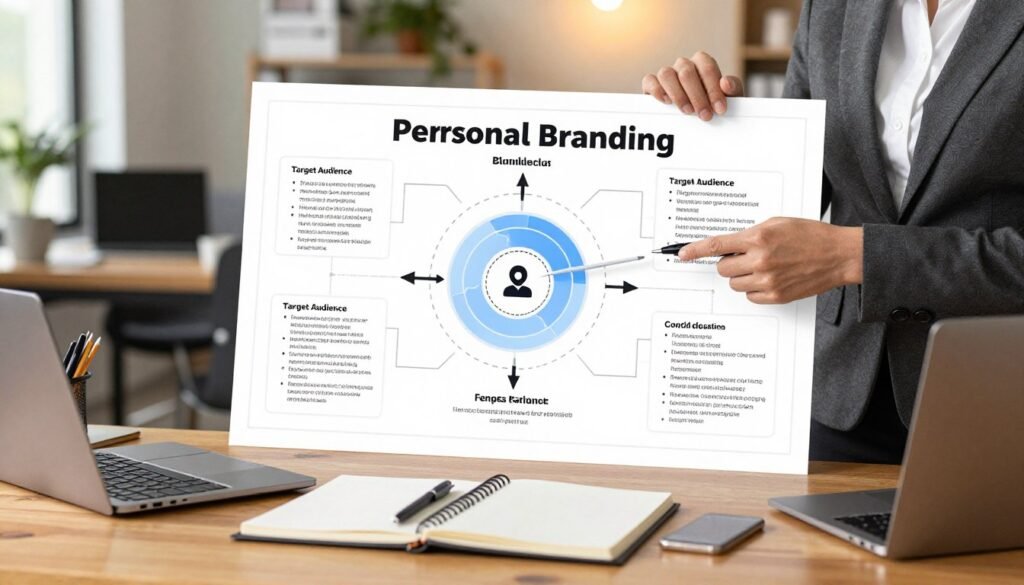
The Personal Branding Blueprint: A Step-by-Step Tutorial
A successful personal branding strategy isn’t about luck. It’s about following a proven, step-by-step process. This blueprint turns the big idea of personal branding into daily actions you can master.
We’ll guide you from defining your core message to measuring your growth. Each step builds on the last, creating a cohesive and authentic digital presence.
Step 1: Craft Your Compelling Unique Value Proposition
Your Unique Value Proposition (UVP) is your personal brand’s foundation. It’s a clear statement that explains who you help, how you help them, and what makes your approach unique.
Think of it as your professional promise. A strong UVP cuts through the noise and connects directly with your ideal audience’s needs.
To build yours, start by defining your purpose. Ask yourself: What problem do I solve? and Why am I the right person to solve it? Construct a narrative around your skills and passion.
Tutorial Tip: Avoid Jargon
Industry terms can confuse people. Speak in plain language your audience uses every day. Instead of “leveraging synergistic solutions,” say “I help teams work better together.” Clarity always wins.
Your final UVP should be something you can communicate easily. More importantly, it should be something you can embody in all your interactions.
Step 2: Select and Master Your Key Platforms
You don’t need to be everywhere. A focused approach on one or two key platforms is far more effective than a scattered presence on five. Your goal is to effectively leverage digital platforms where your audience actually spends time.
Choose based on your niche and content style. A B2B consultant might thrive on LinkedIn. A creative visual artist might focus on Instagram or TikTok.
Platform Optimization Checklist
Once you’ve chosen your primary platform, optimize your profile completely. This checklist ensures you make a strong first impression.
| Profile Element | Optimization Goal | Action Item |
|---|---|---|
| Profile Photo & Banner | Professional & On-Brand | Use a high-quality, friendly headshot. Banner should visually support your UVP. |
| Bio/Headline | Clear UVP & Keywords | Incorporate your core message and terms your audience searches for. |
| Content Links | Drive Targeted Traffic | Link to your website, lead magnet, or most important project. |
| Featured Section | Showcase Best Work | Pin your top-performing post or link to a key case study. |
| Contact Info | Make Connection Easy | Ensure your email or booking link is visible and current. |
Step 3: Build a Sustainable Content Engine
Content is how you deliver value and demonstrate your expertise. The key is to create a system that doesn’t lead to burnout. You need to both create original content and curate impactful content from others.
Consistency is key when it comes to branding. A sustainable rhythm beats a sporadic burst of posts. Plan to deliver value with everything you share.
Example: A Content Pillar Map
Organize your content around 3-5 core “pillar” topics related to your UVP. This map gives you endless ideas.
- Pillar Topic: Time Management for Entrepreneurs
- Sub-topic (Blog Post): “5 Tools to Reclaim Your Workweek”
- Social Post Idea: Share a quick tip from the blog post as a LinkedIn carousel.
- Curated Content: Share and comment on a recent article from a productivity expert.
- Engagement Question: Ask your audience, “What’s your biggest time-waster right now?”
Step 4: Shift from Broadcasting to Engaging
Personal branding is a two-way conversation. Move beyond just posting your content. Start genuine conversations in comments, messages, and community groups.
This is where trust is built. Respond to questions. Ask for opinions. Thank people for sharing your work. This active engagement transforms followers into a community.
Tutorial Tip: The 80/20 Rule of Content
Balance your content to foster connection. Aim for 80% of your posts to educate, inspire, or entertain your audience. The remaining 20% can be directly promotional, like sharing your services or products.
This rule ensures you provide immense value first. It makes your audience more receptive when you do have an offer.
Step 5: Measure, Adapt, and Grow
Your personal branding strategy should evolve. Use data to understand what’s working and what isn’t. Look beyond vanity metrics like follower count.
Focus on meaningful engagement: comments, shares, profile visits, and website clicks. Which content topics drive the most conversation? What time do your posts get the most visibility?
Set a regular time to review these insights. Then, adapt. Double down on successful topics and formats. Tweak or stop what isn’t resonating. This cycle of measure, adapt, and grow ensures your brand stays relevant and continues to expand its reach.
The importance of consistency can’t be overstated, but consistency without learning is just repetition. Use data to inform your consistent efforts, and you’ll build a brand that truly grows with you.
Supercharging Your Marketing Channels with Your Personal Brand
Your personal brand is like a high-octane fuel for your marketing. It boosts your email campaigns and ads. We’ve built your brand’s foundation. Now, let’s use it in owned, earned, and paid media.
Your owned media, like your blog and email list, gets stronger with your unique voice. Earned media, like guest posts, gets more attention when people know you. Paid media, like ads, becomes more credible and effective.
This approach makes your marketing ecosystem cohesive. Every channel strengthens your authority and online reputation.
Injecting Personality into Email Campaigns
Email marketing can feel like a broadcast. With your personal brand, it becomes a conversation. People want to hear from you, not just your company.
Check your email tone. Is it cold or friendly? Rewrite your emails to feel like they’re from you. Share personal stories that relate to your message.
This personal touch makes your emails valuable. It builds a relationship that sales copy can’t. Your email list is your media. Filling it with your personality boosts your online reputation.
Here are a few ways to start:
- Use a conversational greeting and sign-off from you personally.
- Segment your list based on how people connected with your brand.
- Include behind-the-scenes insights or lessons from your week.
Using Your Brand as Social Proof in Ads
Ads ask for trust from strangers. A strong personal brand gives that trust instantly. It makes your ads more effective and less expensive.
Feature your own story, face, or voice in your ads. Use quotes from your content or client testimonials. This boosts your paid media with your earned media.
For example, an ad for your consulting service could say: “Join the 500+ marketers who used our founder’s framework to double their leads.” This connects your personal authority to your offer.
You can also partner with brands in your niche. A co-hosted webinar or joint case study provides strong social proof. This amplifies your reach and solidifies your online reputation as a connected, credible expert.
By adding your personal story to ads, you’re not just selling. You’re inviting people into a relationship with a trusted guide. This turns paid clicks into loyal customers.
Navigating Common Pitfalls and Course Corrections
Missteps are a normal part of building a brand. Even with a good plan, challenges will arise. This section helps you spot and fix these issues without starting over.
Being authentic is crucial. A fake persona is hard to keep up and easy to spot. As one source notes, “People can tell if you’re just putting on a persona. To make a real connection with your audience, you need to give them a reason to trust you, and that means being your authentic self.” Trust is key in personal branding, built through consistent, genuine effort.
Inconsistency: The Brand Killer
Inconsistency can confuse your audience and lose their trust. It shows up in your visual identity, communication voice, and posting schedule.
One week you might be professional and data-driven, the next casual and humorous. Your followers get confused. The solution is to work smarter, not harder, with systems.
- Create a simple brand kit: Define 2-3 primary colors, 2 fonts, and a library of approved photos.
- Develop a content calendar: Plan your themes and posts weekly or monthly to maintain a steady rhythm.
- Document your brand voice: Write down 3-5 adjectives that describe how you communicate (e.g., “helpful,” “direct,” “optimistic”).
These systems help you stay consistent, freeing you to create great content.
The “Expert for Everyone” Trap
Trying to be everything to everyone can make you nothing to anyone. Diluting your message to appeal to a wide audience makes you lose what’s unique and valuable. You become a generalist in a world that values specialists.
Focus is key. Stick to your niche and audience. Speak directly to their needs and dreams. This focus sharpens your marketing and content, saving your energy.
A superficial, fabricated persona will soon be exposed… Be selective and don’t take it personally.
Be selective in your topics, collaborations, and audience. It’s better to have 1,000 engaged followers who see you as *their* expert than 10,000 who don’t care.
Ignoring the Data (or Obsessing Over It)
Data is a guide, not the goal. There are two dangers: ignoring metrics or getting lost in every data point.
The right approach is to be data-informed. Focus on a few key metrics that reflect your goals, not just vanity numbers.
Metrics to Watch:
- Engagement Rate: Are people commenting, sharing, and saving your content?
- Audience Growth: Is your following increasing with the right kind of people?
- Website Traffic: Is your content driving visitors to your site or offers?
Metrics to Question:
- Raw follower count without context.
- Likes without meaningful engagement.
- Every minor fluctuation in daily analytics.
Review your data weekly or monthly, not daily. Use it to guide your creative choices, not replace them. Sometimes, your instinct to try something new is the best data point.
Dealing with these pitfalls is about being aware and making adjustments. With systems for consistency, focus on your niche, and data as a guide, you build a strong brand foundation.
Conclusion
We’ve shown how to build a personal brand that really works. It’s a journey of self-investment, not a quick fix. It’s about knowing yourself and what you want.
A strong personal brand is your best asset in a busy market. It draws in the right people and opens new doors. The trust and authority you build boost your returns.
Your true digital brand changes how you connect with the world. It makes emails feel like personal talks. It gives real proof for your ads.
Start building your digital brand today. Follow the steps we talked about. Stay true to your niche and value real connections. The visibility and influence you gain will shape your future.
Waan ka helay